😢💔 At 64, I Decided I Would Never Visit My Children Again Unless They Invited Me. They Always Welcomed Me With Smiles and Hugs, but One Day, I Discovered How They Really Felt Whenever I Showed Up. I Left With a Broken Heart and Promised Never to Return… Until Three Months Later, Something Happened That They Never Could Have Imagined.
At 64, I never imagined that the people I loved most would make me feel like a stranger.
For three weeks, neither of my children had called. Every morning, I checked my phone, hoping to see their names.
“They’re busy,” I told myself. “They have their own lives.”
But one rainy Sunday, loneliness became unbearable.
I bought chocolates for my grandson and went to my daughter’s apartment.
When she opened the door, her smile appeared a second too late.
“Dad! What a surprise!”
She hugged me, but something felt different.
Inside, my son-in-law barely looked up from his phone. My grandson greeted me without putting down his tablet.
“Dad, you should’ve called first,” my daughter whispered.
I pretended not to notice her discomfort.
At dinner, I tried telling a funny story about her childhood. Nobody laughed.
Then I noticed my daughter exchanging nervous glances with her husband.
When I stepped into the hallway, I overheard him whisper:
“How much longer is he staying?”
My daughter’s answer shattered me.
“Just be patient. He’ll leave soon.”
I stood frozen.
For forty years, I’d sacrificed everything for my children. I’d worked double shifts, skipped vacations, and gone without things I needed so they could have everything.
And now my presence seemed like a burden.
I returned to the table and quietly picked up my coat.
“I should get going.”
My daughter smiled.
“Already, Dad?”
But I saw the relief in her eyes.
Outside, I walked home through the rain, crying like a little boy.
That night, I made a promise.
I would never again visit my children unless they invited me.
If they wanted their father, they knew where to find him.
Days passed. Then weeks.
Nobody called.
Instead of begging for attention, I began rebuilding my life. I joined a walking group, repaired my old guitar, and started spending time with people who genuinely enjoyed my company.
For the first time in years, I felt alive again.
But exactly three months after that painful Sunday, something happened that my children never could have imagined.
And everything changed.
Read the continuation in the comments 👇👇‼️
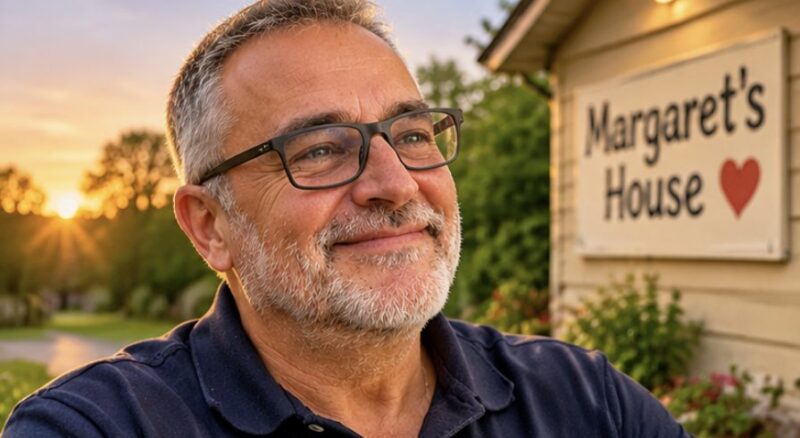
Three months after I stopped visiting my children, my daughter appeared at my front door at 9:30 on a Friday night.
Her face was pale. Her eyes were swollen from crying.
And the first words she said made my heart stop.
“Dad… please tell me you haven’t sold the house.”
I stared at her.
“Emily, what are you talking about?”
She stepped inside without answering.
Behind her stood my son, Michael, holding an envelope.
“We went to the bank today,” he said. “They told us you withdrew almost all your savings.”
I looked from one frightened face to the other.
“So that’s why you’re here?”
Emily shook her head.
“No, Dad. That’s not why. But we need to understand what’s happening.”
For a moment, I considered telling them everything.
Instead, I invited them into the living room.
The same living room where their mother had once helped them with homework, where we’d celebrated birthdays, where I’d spent countless evenings waiting for their calls.
Emily noticed the photographs missing from the shelves.
“Where are all our pictures?”
“I packed some away.”
 “Why?”
I took a deep breath.
“Because I finally started living again.”
Michael frowned.
“Dad, you’re sixty-four. You can’t just empty your savings and disappear without telling anyone.”
His words stung.
“Disappear?” I repeated. “Michael, I haven’t heard from you in three months.”
He looked away.
Emily began crying.
“We thought you were angry with us.”
“I was hurt,” I admitted. “There’s a difference.”
Then I told them about that Sunday.
About the forced smiles.
About the conversation I’d overheard.
About walking home through the rain, wondering whether my own children still wanted me around.
Emily covered her mouth.
“Oh, Dad…”
Michael sat down heavily.
Neither spoke for a long time.
Finally, Emily whispered, “Why didn’t you tell us?”
I looked at her.
“Because I wanted you to notice without being told.”
That was when Michael noticed a framed photograph beside my chair.
It showed me standing outside a small building, smiling beside several elderly people.
“What’s this?”
I picked up the photograph.
“Something your mother and I dreamed about years ago.”
Before Margaret died, we’d talked about opening a small community center for older people who lived alone.
A place where nobody had to spend birthdays by themselves.
A place where someone would always remember their name.
After her death, I abandoned the idea.
I told myself my children needed me more.
But during those three lonely months, something changed.
At my walking group, I met a seventy-eight-year-old widow named Helen.
She hadn’t celebrated Christmas with her family in six years.
Then I met George, a retired teacher whose children lived twenty minutes away but rarely visited.
And one afternoon, Helen said something I’ll never forget.
“Robert, loneliness isn’t about having nobody. It’s about having people who make you feel invisible.”
That evening, I took out Margaret’s old notebook.
Inside, she’d written plans for our dream.
I realized I still had time to make it happen.
So I used part of my savings to lease an empty storefront near the park.
I bought secondhand tables, chairs, books, and a coffee machine.
With help from my new friends, I turned it into a gathering place.
We called it Margaret’s House.
The opening was scheduled for the following morning.
Emily stared at me.
“You did all that… alone?”
I smiled.
“Not alone. I had people who wanted to be there.”
Her face crumpled.
Michael picked up the photograph again.
“Why didn’t you ask us to help?”
I looked at him quietly.
“Would you have had time?”
He opened his mouth.
Then closed it.
For the first time, neither of my children had an answer.
The next morning, I arrived at Margaret’s House before sunrise.
I expected perhaps fifteen people.
Instead, more than sixty were waiting outside.
Helen had invited her neighbors. George had contacted former colleagues. Volunteers brought flowers, homemade cakes, and handwritten welcome cards.
And standing near the entrance were Emily, Michael, Daniel, and my grandson Ethan.
I froze.
Emily approached me.
“Dad, we know we can’t undo what happened. But please let us be here today.”
Before I could answer, Ethan ran toward me.
“Grandpa!”
He wrapped his arms around my waist.
“I made you something!”
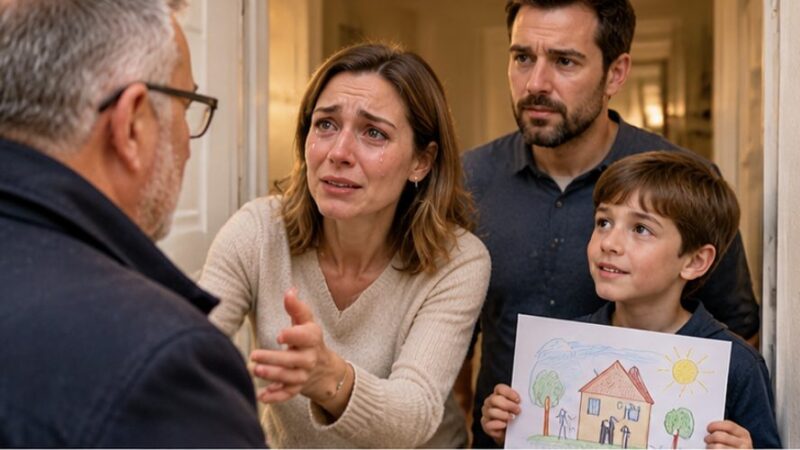
He handed me a drawing.
It showed a small house surrounded by smiling people.
At the top, in crooked letters, he’d written:
“GRANDPA’S HOUSE, WHERE NOBODY IS LONELY.”
My eyes filled with tears.
Then Michael stepped forward.
“Dad, I took the weekend off. If you need shelves installed or anything repaired, I’m here.”
Emily added, “And I brought something.”
She opened her bag and pulled out a framed photograph.
It was Margaret and me on our wedding day.
“Mom should be here too,” she whispered.
I couldn’t speak.
Together, we hung the photograph near the entrance.
Then something happened that none of us expected.
Helen approached my children.
“Are you Robert’s family?”
Emily nodded.
Helen took her hands.
“Your father saved me.”
Emily looked startled.
Helen continued.
“Three months ago, I barely left my apartment. I felt forgotten. Your father started visiting me every Tuesday. He brought groceries, fixed my broken radio, and reminded me that my life still mattered.”
She glanced toward me.
“And now he’s doing that for dozens of people.”
Emily began crying again.
But this time, I understood why.
She was seeing a part of me she’d forgotten existed.
Not just her father.
Not just the man who babysat, brought gifts, and showed up whenever someone needed him.
A person with dreams.
A person with feelings.
A person whose life still had meaning.
Later that afternoon, Emily found me sitting alone beneath Margaret’s photograph.
She sat beside me.
“Dad, I owe you an apology.”
I waited.
“That Sunday, I was exhausted. Daniel and I had argued. Ethan had been difficult all day. When you arrived, I thought only about how inconvenient the timing was.”
Her voice broke.
“But I never stopped to think how much courage it might have taken you to come.”
I took her hand.
“I don’t need to be the center of your life, sweetheart. I just don’t want to feel like an unwanted visitor.”
She hugged me.
“You never will again.”
Michael joined us.
“We can’t promise we’ll never be busy, Dad. But we can promise you’ll never have to wonder whether you’re loved.”
That evening, after everyone left, I stood outside Margaret’s House and looked at the glowing windows.
For the first time in five years, I felt as though Margaret was standing beside me.
My children now visit regularly.
Sometimes they help at the center.
Sometimes we have dinner together.
And sometimes they call simply to say, “Dad, we miss you.”
But the greatest change wasn’t in them.
It was in me.
I no longer measure my worth by how often my phone rings.
I no longer wait for an invitation to feel important.
And I’ve learned that growing older doesn’t mean becoming invisible.
Sometimes it means finally discovering who you are when you stop living only for everyone else.
If your parents are still alive, call them today. One day, the voice you’ve been too busy to hear may be the one you’d give anything to hear again. ❤️
Would you have forgiven your children, or would you have kept your distance? Tell me in the comments 💬